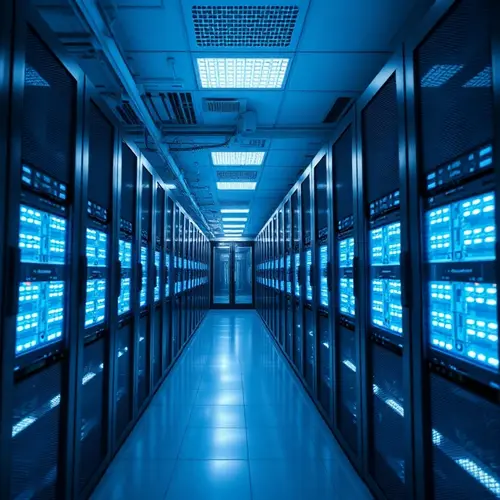
The infrastructure powering digital services in a contemporary data center.
Self-Driving Network Automation: AI Transforms Enterprise Operations
Enterprise operations are experiencing a significant shift with the rise of self-driving network automation. This advanced infrastructure embeds artificial intelligence to manage networks. AI plays a crucial role in this transformation, enabling systems to function with minimal human intervention. Self-driving network automation promises enhanced efficiency and reliability across various organizational settings.
What Happened
Enterprise networking vendors and operators are actively adopting self-driving networks. These systems integrate AI to detect, reason, and act autonomously. This significant development was reported on March 30, 2026, highlighting a move towards greater network independence.
Details From Sources
Self-driving networks combine machine learning, generative agents, and closed-loop automation to operate effectively, according to the article from theregister.com. Specific platforms exemplify this trend, including HPE Mist AI and GreenLake Intelligence. These solutions are designed to predict and proactively fix issues within network infrastructures. Their primary purpose is to reduce operational overhead and improve overall system stability. Such solutions target diverse environments like hospitals, retail establishments, and university campuses. The original report scores well due to its industry-wide scope and direct relevance to enterprise networking, including concrete vendor examples.
Why This Matters
The adoption of self-driving networks significantly impacts enterprise operations. They autonomously resolve network issues, leading to substantial reductions in operational overhead. Furthermore, these systems contribute to greatly improved network stability. The autonomous nature of issue resolution minimizes downtime and enhances network performance.
Background Context
Self-driving networks are defined as infrastructure that embeds artificial intelligence. This AI enables the networks to detect, reason, and act without direct human command. A key component of these systems is closed-loop automation, which allows for continuous monitoring and automatic adjustments. This ensures the network remains optimized and resilient.
Industry Reactions
Enterprise networking vendors and operators are actively adopting these sophisticated systems. The original report noted the development’s “industry-wide scope.” It also recognized its “direct relevance to enterprise networking,” indicating broad industry acceptance and integration. This widespread adoption underscores the perceived value of autonomous network management.
Future Implications (SPECULATIVE)
While the impact of self-driving networks is notable, the original report suggests it is “not groundbreaking.” This assessment is partly due to “limited novelty and promotional, vendor-sponsored framing.” This implies that while significant, the current developments represent an ongoing evolution rather than an immediate revolutionary change in the industry.
Conclusion
The enterprise sector is steadily embracing self-driving networks for operations. These AI-driven systems leverage autonomous detection, reasoning, and action capabilities. They offer benefits such as reduced operational overhead and improved network stability. Despite their notable impact, the source article indicates these advancements represent an evolutionary step rather than a groundbreaking revolution.
FAQ
What are self-driving networks?
Self-driving networks are infrastructure that embeds AI to autonomously detect, reason, and act.
What technologies power self-driving network automation?
These networks combine machine learning, generative agents, and closed-loop automation.
What are the main benefits of self-driving networks for enterprises?
They aim to predict and fix issues, reduce operational overhead, and improve stability.
Which industries or environments are adopting these networks?
They are being adopted by enterprise networking vendors and operators for use in hospitals, retail, and campuses.
Can you give examples of platforms for self-driving network automation?
HPE Mist AI and GreenLake Intelligence are highlighted as examples of such platforms.
Explore more AI and Data Science News to stay updated on industry developments.